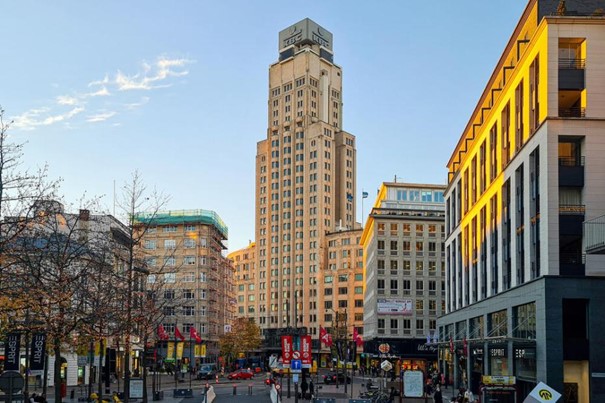
Renovation Boerentoren Antwerp (BE)
Main contractor Monument NV from Ingelmunster started the asbestos remediation of the entire building in mid-2021. A very intensive phase in which absolutely every harmful fiber or substance is banished for eternity. With the exception of the original steel load-bearing frame, no splinter remains intact, as even the old lead-containing paint layers are irrevocably removed.
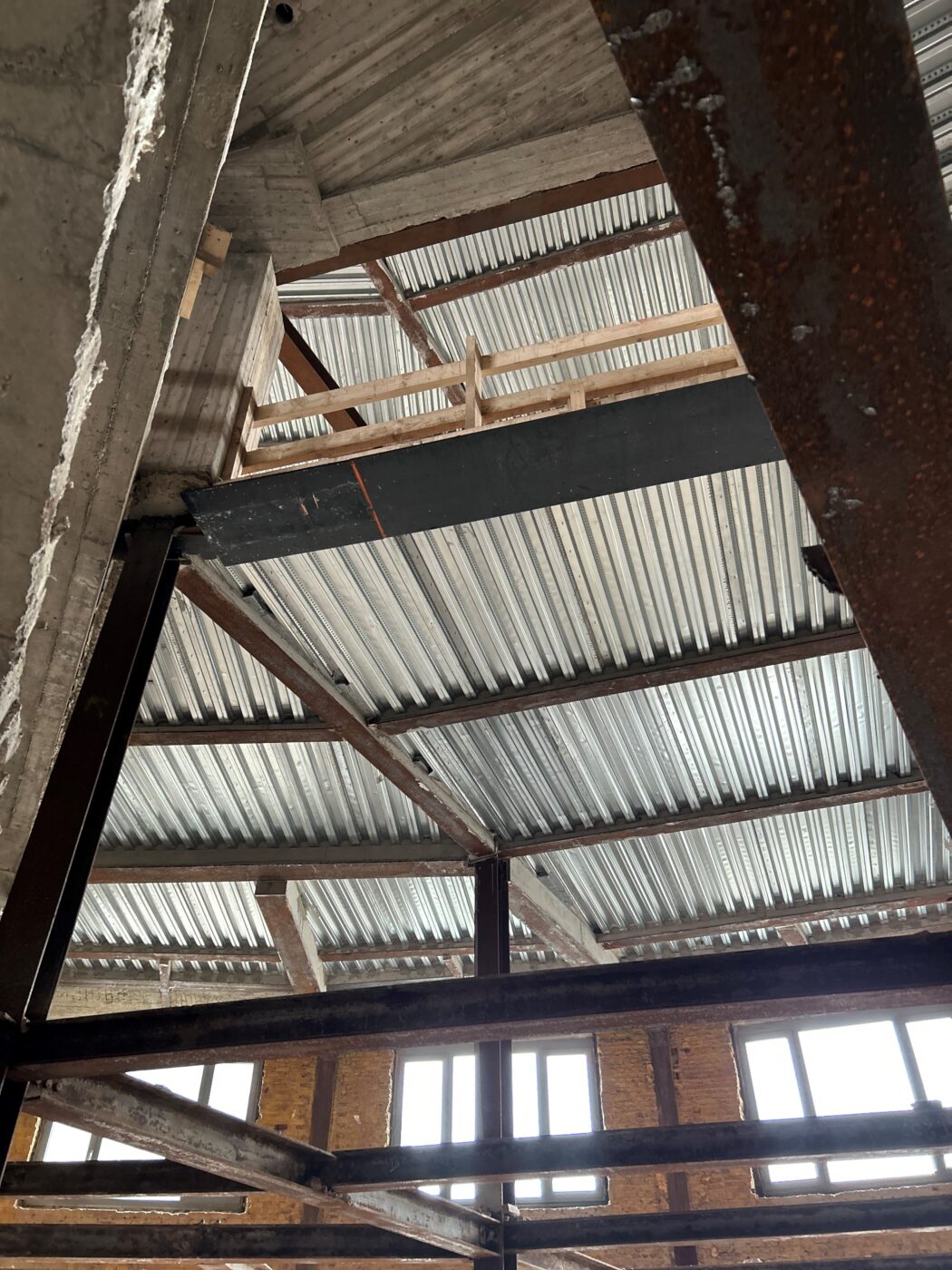
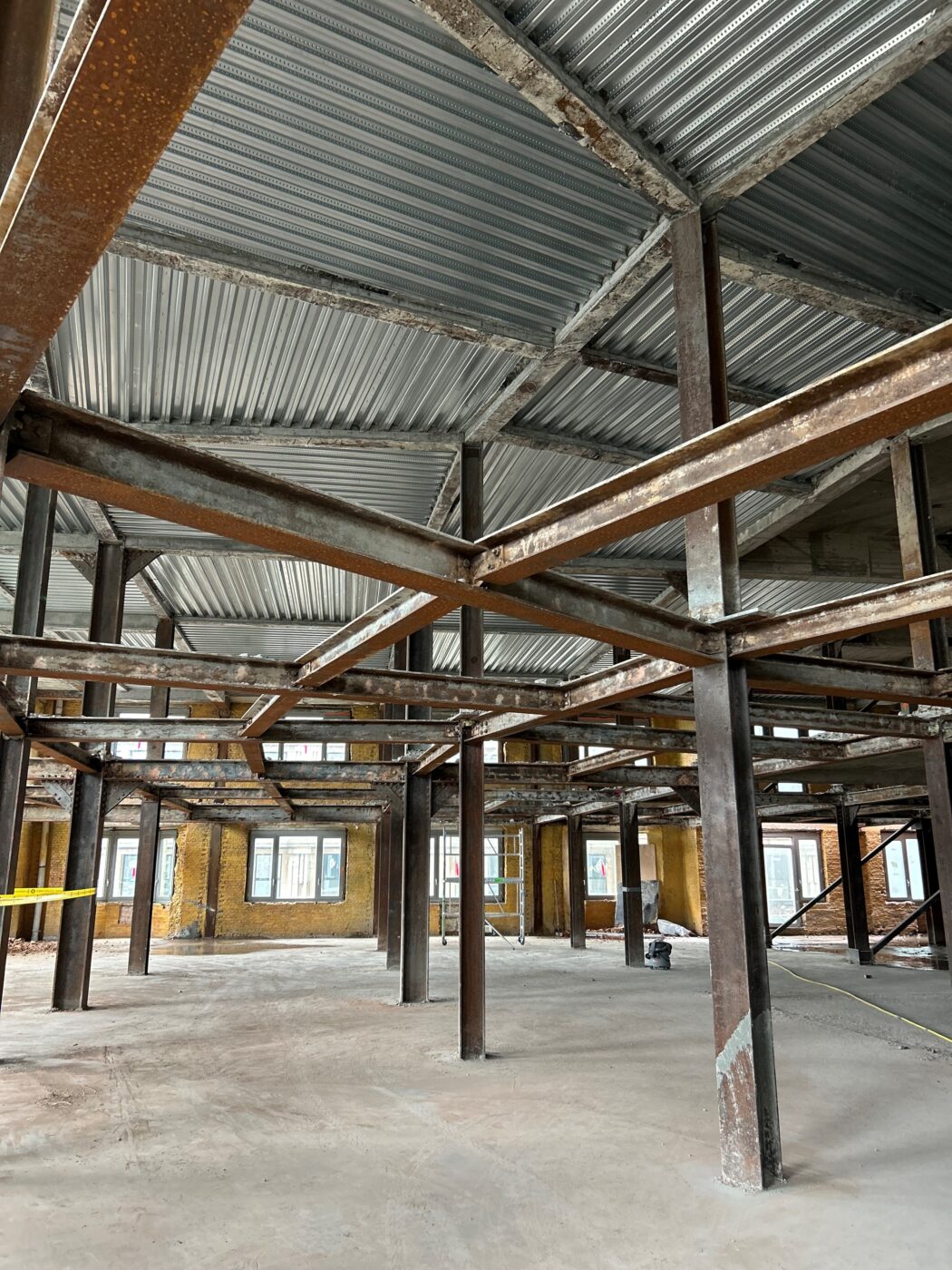
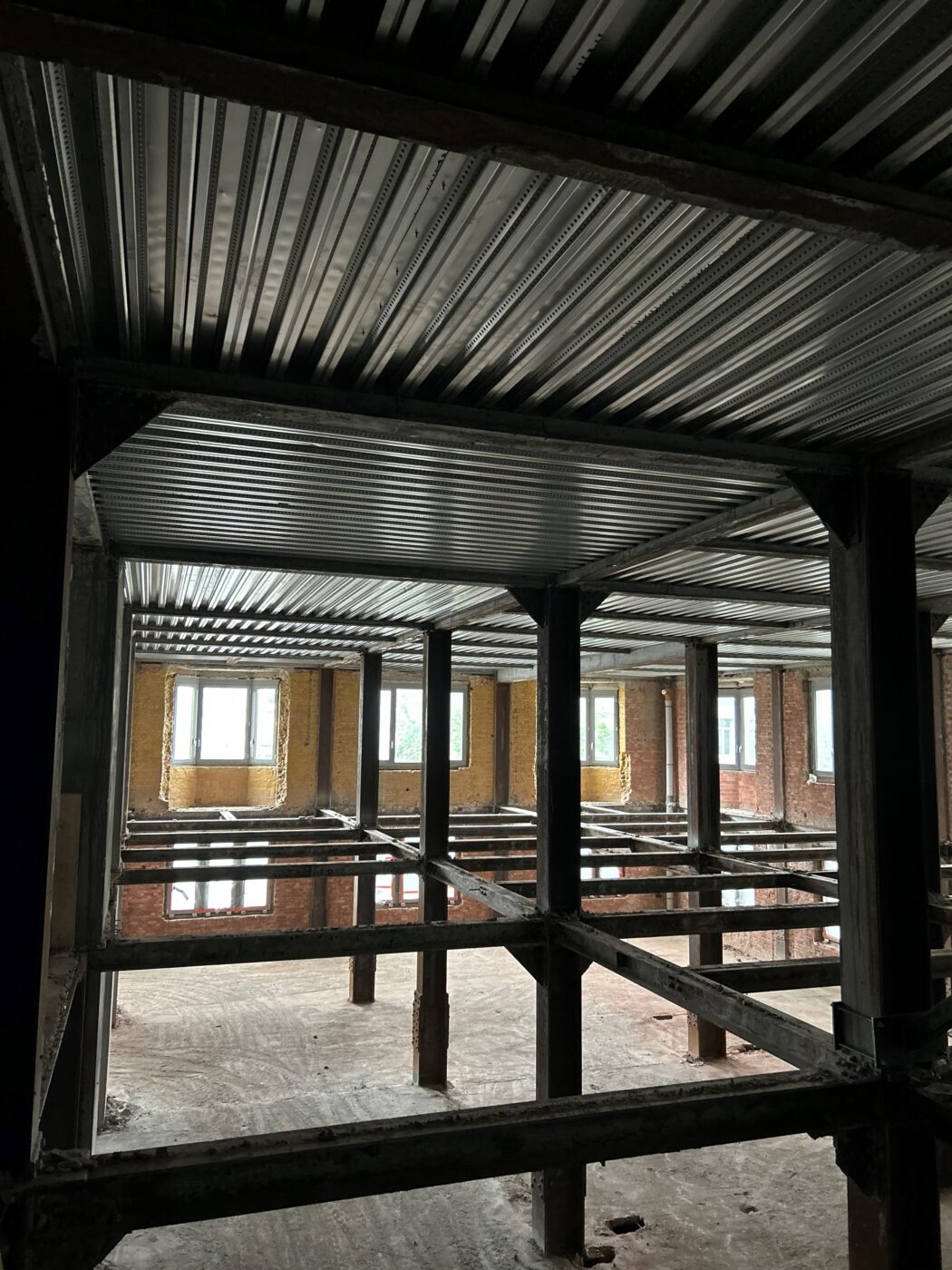
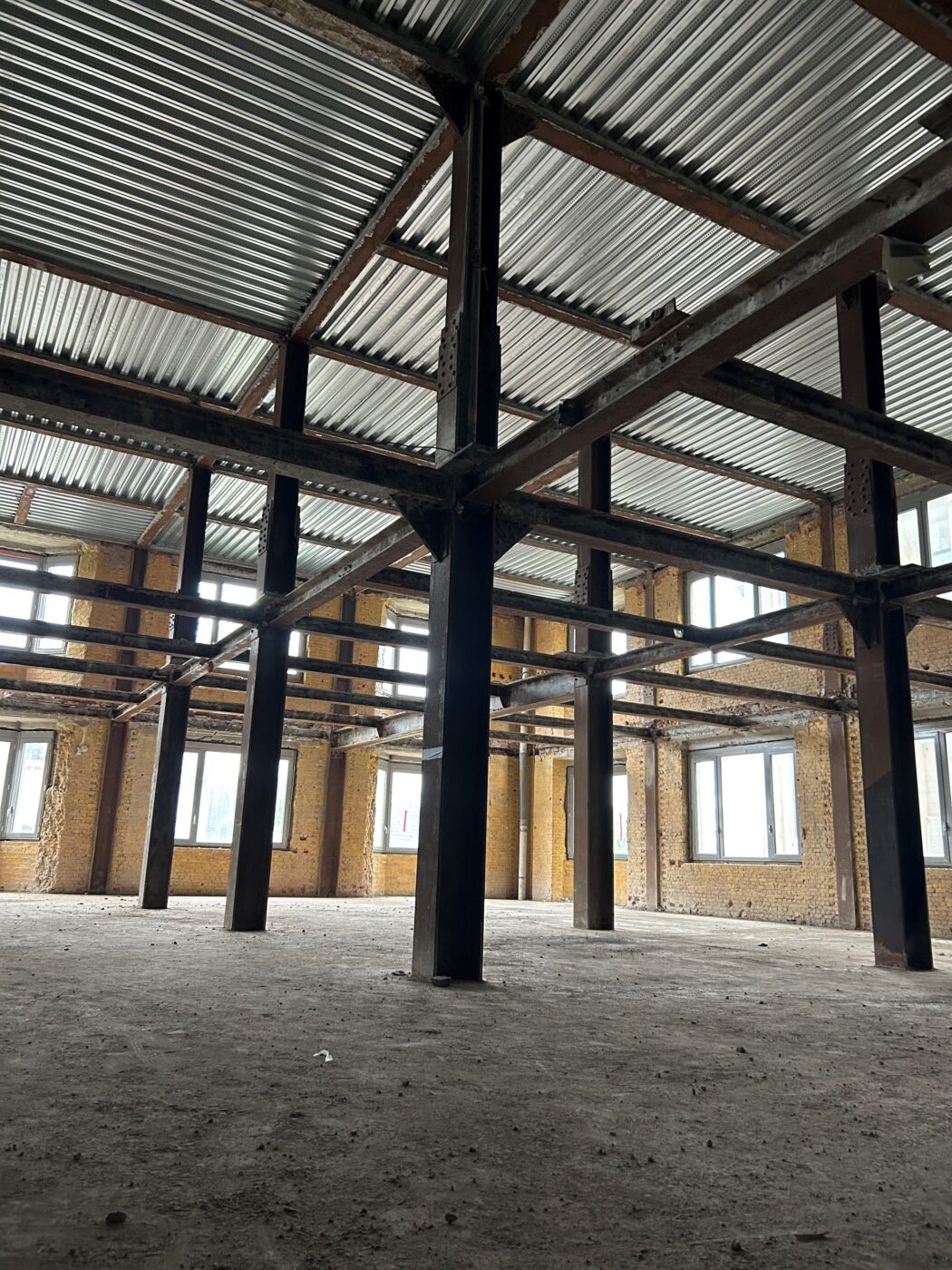
A large part of the attention during the work is focused on the existing load-bearing floors of the original structure. At that time, something resembling a steel mesh was used, intended as lost formwork, onto which concrete was poured. The problem: the asbestos fibers from the later ceiling finish were impossible to completely remove from the finely woven structure and had become embedded in the concrete. Additionally, there were further issues with load-bearing capacity, fire safety, and a host of other problems. Therefore, to comply with current regulations, standards, and design, there was no other choice but to demolish everything.
But then, of course, another problem arises: How can you build 12,000m² of new floors in a tower without a significant lift, where the largest window opening is smaller than that of a modern single-family home, and where you cannot make openings in the façades of a protected monument?
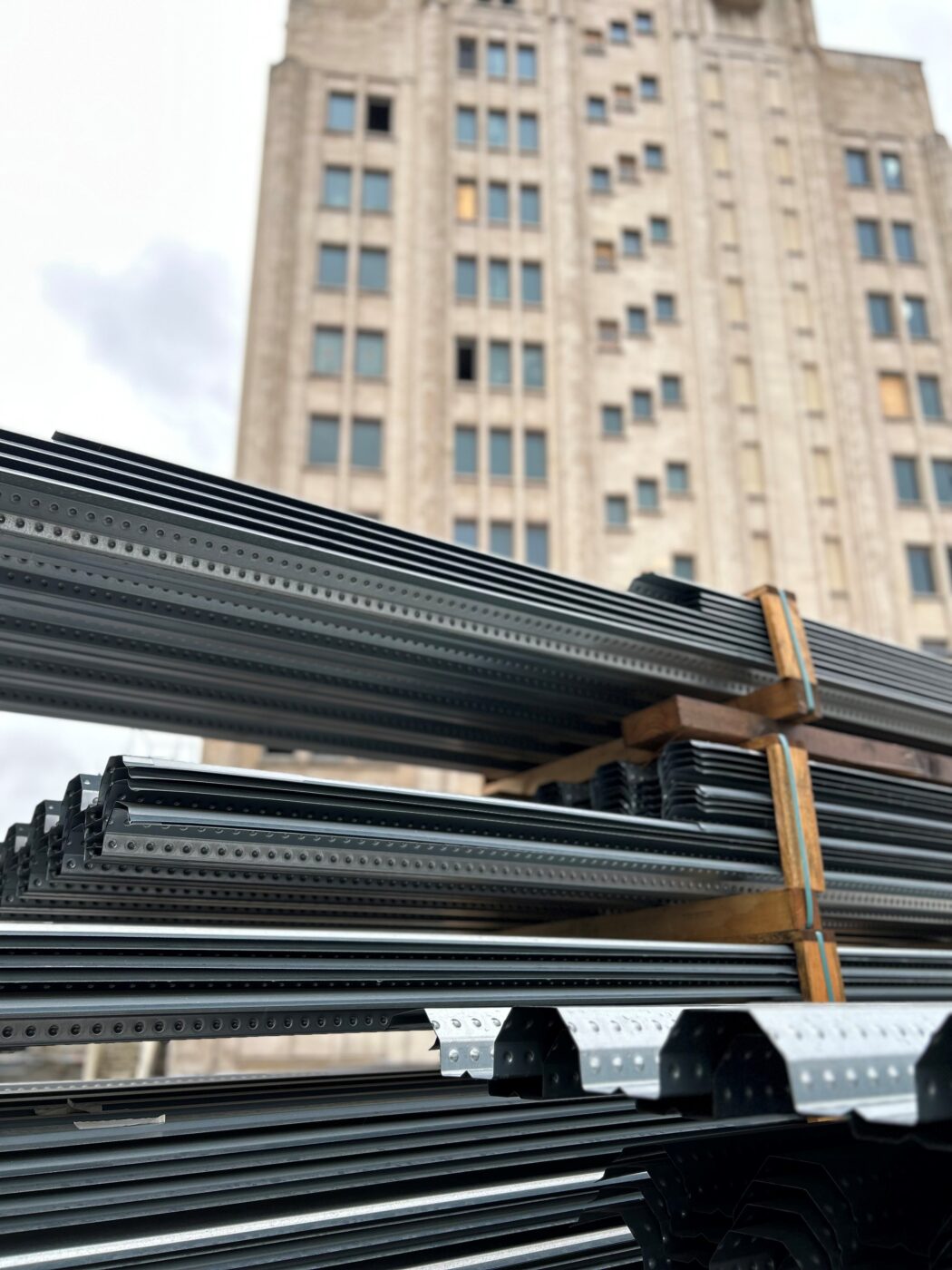
Many established techniques offered no solution. Concrete prefab elements like hollow core slabs, wide floor slabs, pots, and beams… too heavy, too cumbersome, limitations in vertical transport, too labor-intensive, limited construction height, etc. The only feasible option was the application of a composite steel floor deck. But what type of floor is this actually?
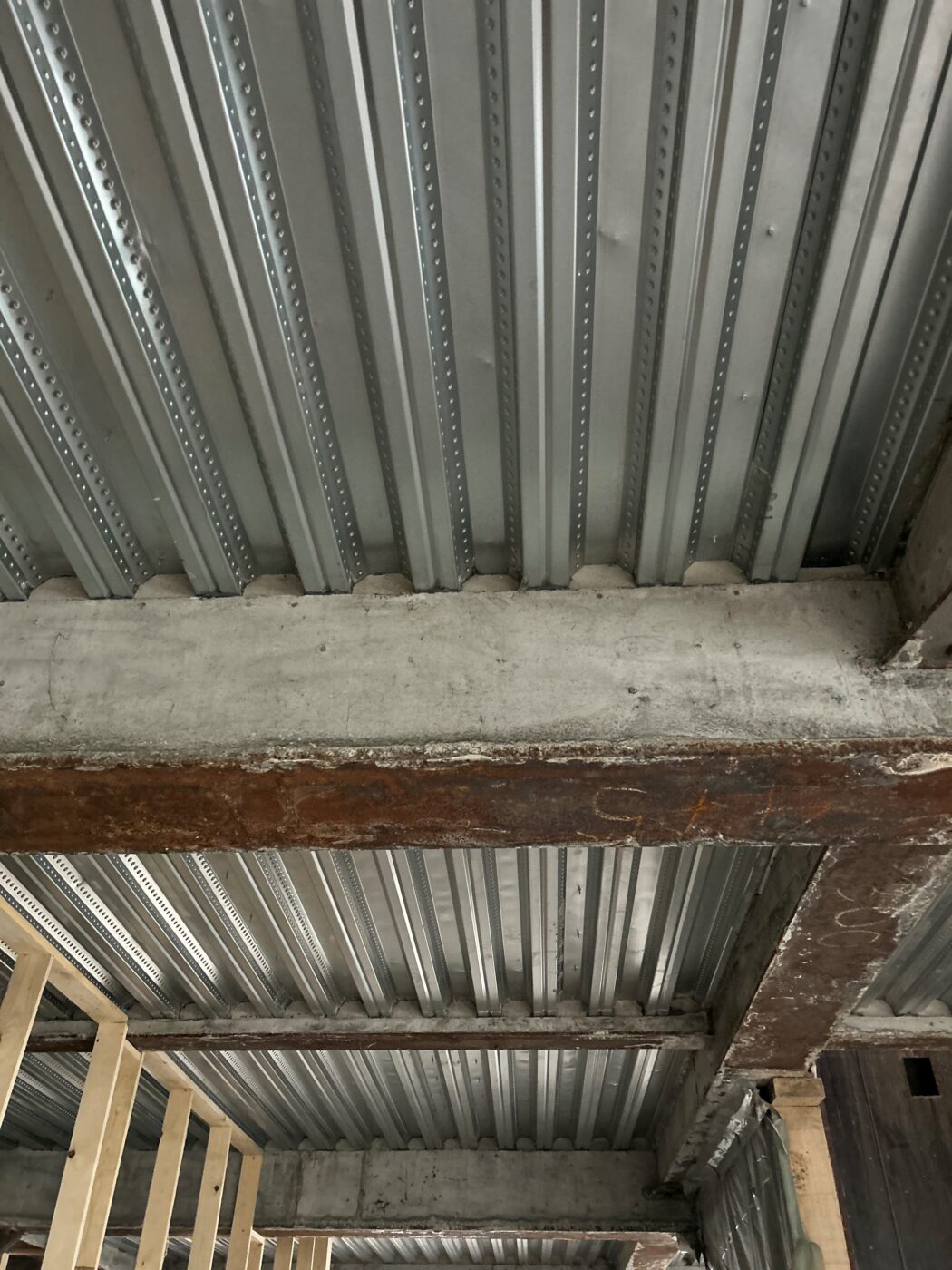
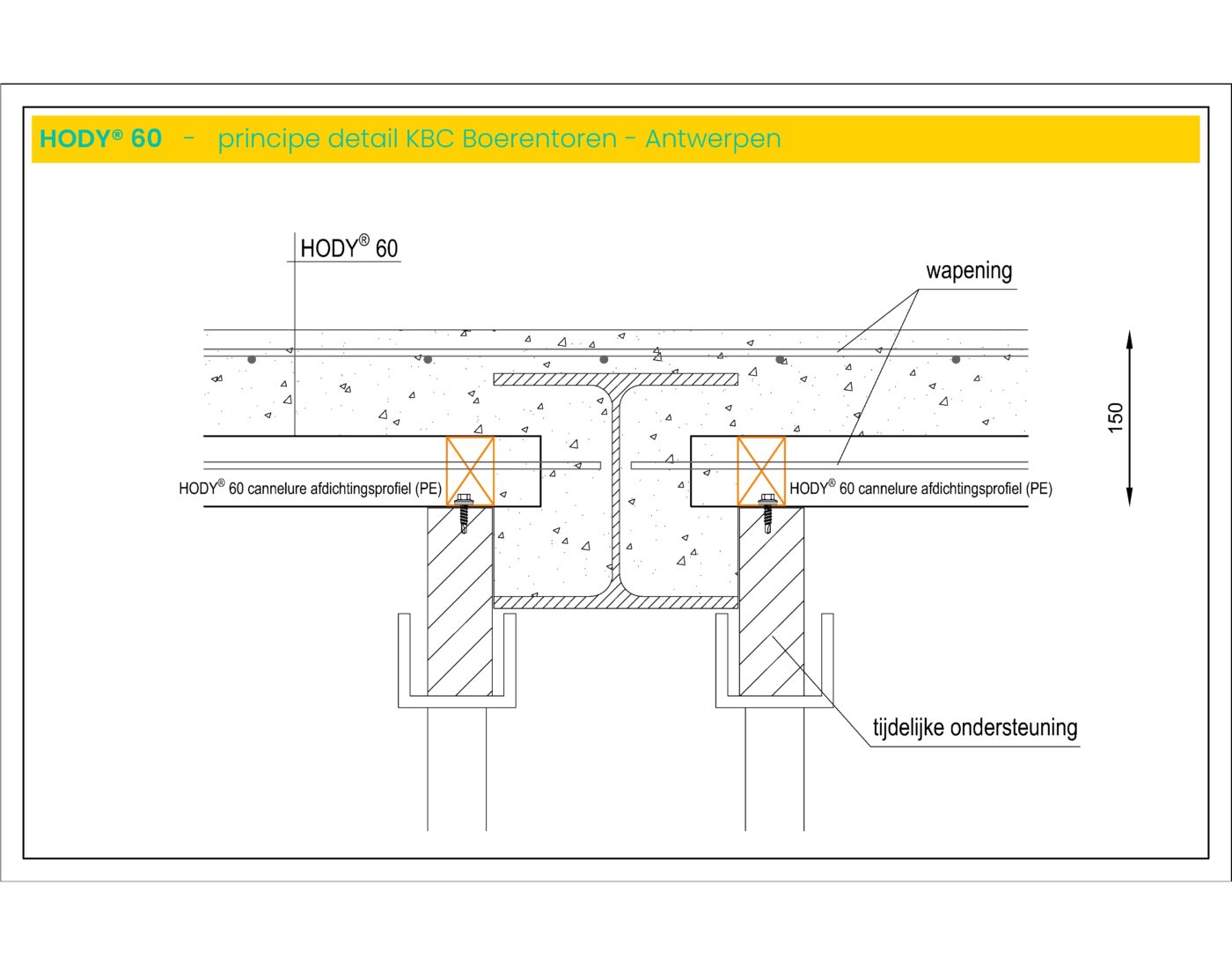
Generally, this type of floor uses a profiled steel sheet that serves as lost formwork and partly as reinforcement, which is then topped with a concrete pressure layer. There are numerous advantages. The floors are lightweight with high load-bearing capacity, limited in construction height, easily transportable vertically, and can be quickly assembled without the help of a crane or other lifting equipment, making them ideal for renovation.
In consultation with the main contractor and involved design offices, REPPEL bv, a specialist in building solutions from Dordrecht, was asked to conduct an analysis and propose a solution based on a comprehensive set of requirements.
Given the relatively limited spans (2500-3000mm), the HODY 60 type profile was chosen. Customization was essential as the placement of the profiles had to occur between two steel beams. Using temporary wooden support, the HODY profile was raised to the correct height, and the calculated specific reinforcement details were added before the concrete could be poured. This was also technically challenging. Pumping at greater heights requires a powerful installation and concrete that is inherently suitable for the application. After the concrete had cured, all temporary supports were removed, and the floors were ready for further finishing, regardless of their future purpose.
This type of floor is the perfect answer to many projects where similar problems arise; moreover, they are the solution for a sector that today, more than ever, is looking for efficient construction, time savings, material savings, lighter structures, and CO2 reduction.
Contractor
Monument N.V. Ingelmunster
Constructor
Arcadis Antwerp
Building Materials Supplier
Verhelst Bouwmaterialen Oudenburg
Related products